

Pablo Pryluka
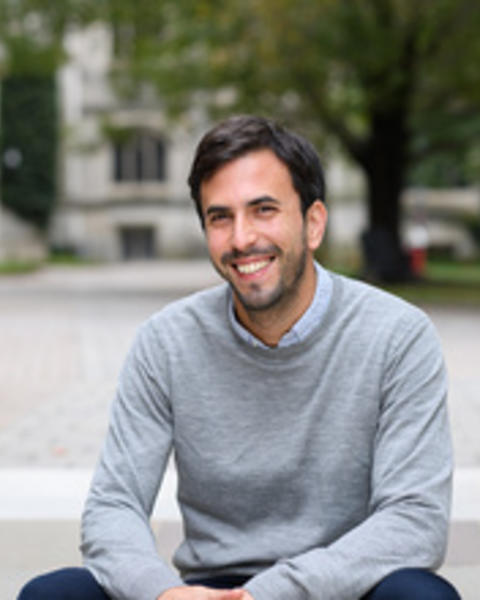
Pablo Pryluka is a modern Latin American and global historian interested in the intersection of economic, social, and environmental history. At the Weatherhead Center, he will be working on his book manuscript: “Developing Consumers: A History of Wants and Needs in Postwar South America.”
Questioning the dominant view of the period as the result of Cold War rivalries and ideological debates, “Developing Consumers” shows that developmental policies to modernize material life shaped the region during the postwar years by altering perceptions of welfare and material needs. After World War II, Argentina, Brazil, and Chile applied developmental strategies that aimed to guarantee economic sovereignty, improve the standard of living, and expand domestic markets. While these strategies resulted in the wider availability of new durable goods, which in turn became emblematic of modern wellbeing, access did not expand uniformly throughout social groups. By the end of the 1960s, it became evident that the developmental state could guarantee neither social mobility nor universal access to this new standard of living, frustrating consumer expectations. In response to these difficulties, policymakers, marketing experts, and intellectuals took part in a debate about rationalizing consumption: which needs should be covered for everyone and which ones were artificial desires of affluent groups?
Pryluka received his PhD in History from Princeton University (2024). His research has been supported by the Fulbright Commission, the Hagley Museum, and the John W. Hartman Center (Duke University).