

Carlo Taviani
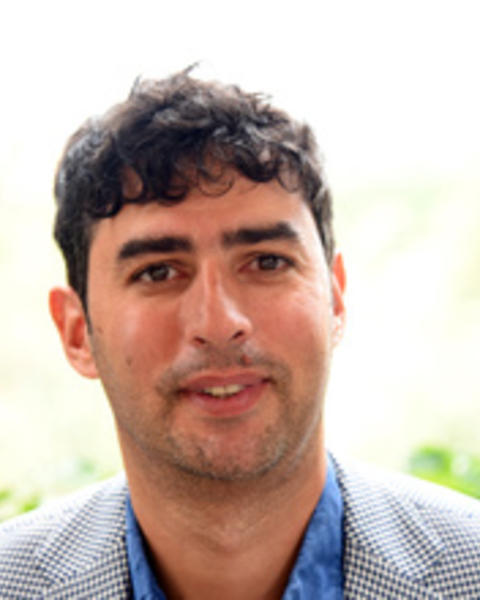
Carlo Taviani earned his bachelor’s degree from the University La Sapienza in Rome and received his PhD from the University of Perugia. He has held fellowships at the Istituto Italiano per gli Studi Storici (2005-2006) and the Deutsches Historisches Institut in Rome (2006 and 2015-2016), where he was also a research fellow (2019-21); I Tatti, the Harvard University Center for the Italian Renaissance Studies (2009-10), where he was also a research associate (2017-19); the Folger Shakespeare Library in Washington DC (2012); the Italian-German Historical Institute in Trent (2011-14) and the University of Zurich (2021-22). He was a visiting scholar at the University of Chicago, the MacMillan Center at Yale (2013), a visiting lecturer at the University of Cape Town (2015), and visiting scholar at the University of Nagoya (2019). He taught at the University of Cape Town (2015) and the University of Bologna (2020-2022).
His PhD thesis focused on revolts and political conflicts in Renaissance Genoa. He has also studied political exiles and their cultural entanglements in Renaissance Italy. More recently, he has been working on economic topics such as the history of the Casa di San Giorgio in Genoa—an institution that managed the public debt—as a model for later business corporations such as the Dutch East India Company and the Mississippi Company. His work on this topic has led him to an interest in elaborating a methodology of institutional migration. Thanks to his stay in Cape Town, he has moved into studying the history of Africa. His current research project is titled Genoese Merchant Networks in Africa and across the Atlantic Ocean (ca. 1450–1530). It collects data to study the Genoese traders and their networks between the Mediterranean and the Atlantic. It also looks at their involvement in the early transatlantic slave trade.